Affiliate Disclosure: MomBabyPicks.com participates in the Amazon Services LLC Associates Program. When you purchase through links on this page, we may earn a small commission at no additional cost to you. Our editorial recommendations are based on product research and are not influenced by affiliate relationships.
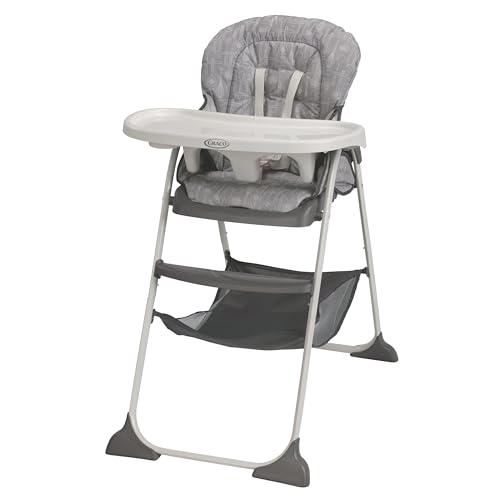
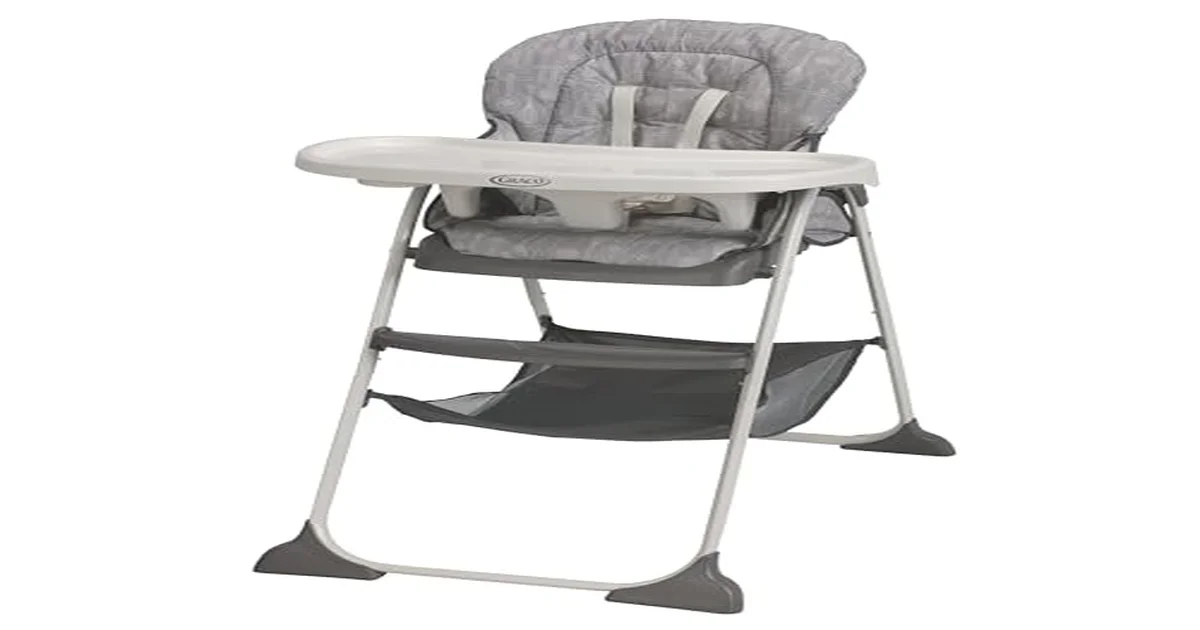
Graco Slim Snacker
Check Price on Amazon →Introduction
Choosing a high chair sounds simple until you start looking. Full-size or compact? Foldable or fixed? Cushioned or wipeable? Does it convert to a booster? Will it fit at your table? Can you clean it after a bowl of pureed sweet potato explodes across it at 6 months?
High chairs are used for years — from around 6 months when baby starts solids, often through age 3 or 4 when they transition to a booster or regular chair. The chair you buy needs to grow with your baby and survive daily food messes without becoming a bacteria trap.
This guide covers five high chairs worth buying in 2026, from full-featured flagship models to compact options for small spaces.
If you’re prepping for solids, also check our guides on newborn feeding essentials and the best baby bottles for newborns.
Quick Picks At A Glance
High chairs are used for years — match yours to your kitchen space, budget, and longevity goals.
Best All-Around
Graco Slim Snacker
Folds slim, converts to a booster seat, and the tray is easy to clean. The practical default choice.
Best Budget
IKEA Antilop
Around $25 with a dishwasher-safe tray. Used in more households than any other high chair worldwide.
Best for Small Spaces
Joovy Nook
Folds flat against the wall and locks in place — takes up a fraction of a full-size chair's footprint.
Best for Longevity
Stokke Tripp Trapp
Adjusts from 6 months through adulthood. One chair that grows with your child for many years.
How We Selected These High Chairs
We evaluated each high chair on: safety certifications (ASTM F404, JPMA seal), ease of cleaning (removable and washable tray/seat), adjustability (seat height, footrest, recline), stability and tipping resistance, age and weight range, and whether it converts to a toddler chair or booster to extend its useful life. We prioritized chairs with a five-point harness and avoided models with widespread tipping complaints.
Comparison Table
| High Chair | Best For | Weight Limit | Recline | Converts? | Ease of Cleaning | Price |
|---|---|---|---|---|---|---|
| Graco Slim Snacker | Overall | 57 lbs | Yes | Booster | Very easy | ~$100 |
| IKEA Antilop | Budget/easy clean | 33 lbs | No | No | Easiest | ~$25 |
| Joovy Nook | Small spaces | 50 lbs | No | No | Easy | ~$165 |
| Stokke Tripp Trapp | Longevity | 330 lbs (chair) | No | Grows to adult | Moderate | ~$330 |
| Chicco Polly | Features | 50 lbs | Yes (7 positions) | No | Moderate | ~$120 |
1. Graco Slim Snacker — Best All-Around High Chair
The Graco Slim Snacker stands out because it does two things most full-size high chairs don’t: it folds slim enough to store between feedings, and it converts to a booster seat that straps to a dining chair when baby is ready. The seat holds babies from 6 months to 3 years (up to 57 lbs), and the one-hand tray removal makes getting baby in and out quick.
The seat pad is machine-washable. The tray has a removable dishwasher-safe insert. Five-point harness with three height positions. JPMA certified. At a mid-range price, it covers the needs of most families without the size or cost of more premium options.
Pros:
- Folds slim for storage between meals
- Converts to a booster seat for longer use
- One-hand tray removal
- Machine-washable seat pad + dishwasher-safe tray insert
- JPMA certified, 5-point harness
- Holds up to 57 lbs
Cons:
- Not as easy to deep-clean as the IKEA Antilop (more crevices)
- Fold mechanism takes practice initially
- Not adjustable to table height (fixed height)
Who it’s for: Most families — it’s the best balance of features, price, cleanability, and space efficiency.
2. IKEA Antilop — Best for Easy Cleaning
The IKEA Antilop is the cleanest high chair ever made. It’s one piece of molded plastic with no crevices, no fabric, and no padding. Wipe it down in seconds. The tray detaches for washing. The legs pop off for storage. It fits under most tables.
At a very low price, it’s the best deal in baby gear. The weight limit is 33 lbs (approximately 3 years old for most children). There’s no recline, no height adjustment, no convert-to-booster feature. For small apartments, minimalist families, or parents who’ve already dealt with cleaning a crevice-covered high chair, this is the obvious answer.
A removable seat cushion (sold separately) adds comfort for extended sitting.
Pros:
- Easiest high chair to clean — one-piece plastic body, no crevices
- Very affordable — one of the lowest prices available
- Compact footprint, legs detach for storage
- Five-point harness included
- Available widely (IKEA stores and online)
Cons:
- No recline — not suitable for babies who can’t sit upright independently
- No height adjustment — may not work at all table heights
- 33 lb weight limit — shorter useful life than competitors
- No padding on main seat (add-on cushion recommended)
- Does not convert to booster
Who it’s for: Parents who prioritize easy cleaning above all else, minimalists, small apartment dwellers, or families who want a no-fuss second high chair for grandparents’ homes.

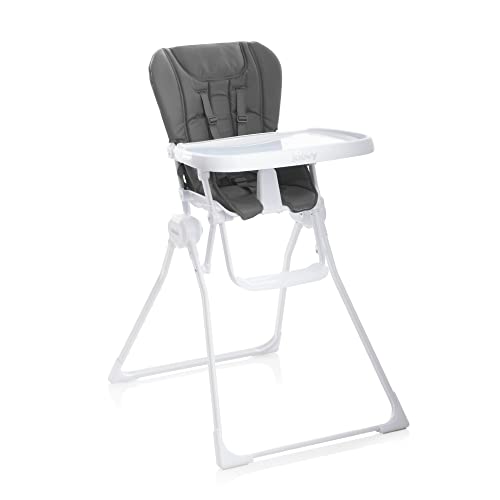
3. Joovy Nook — Best for Small Dining Spaces
The Joovy Nook is designed to fit into the corner of a kitchen or dining room — its square shape with flat-sided back panels nests against walls more tightly than traditional rounded high chairs. It holds babies up to 50 lbs across a height-adjustable seat (6 positions) with a three-point harness. The tray removes one-handed.
The seat pad is machine-washable. It doesn’t recline and doesn’t convert to a booster, but for families who need a solid, reasonably priced high chair that works in tight dining situations, it’s a strong pick.
Pros:
- Corner-friendly flat-sided design for small dining spaces
- Six seat height adjustments
- Machine-washable seat pad
- One-hand tray removal
- 50 lb weight limit
Cons:
- Three-point harness (not five-point)
- No recline
- Does not convert to booster
- Less widely reviewed than top competitors
Who it’s for: Families in smaller apartments or homes with tight dining areas who need a full-size high chair that doesn’t dominate the room.
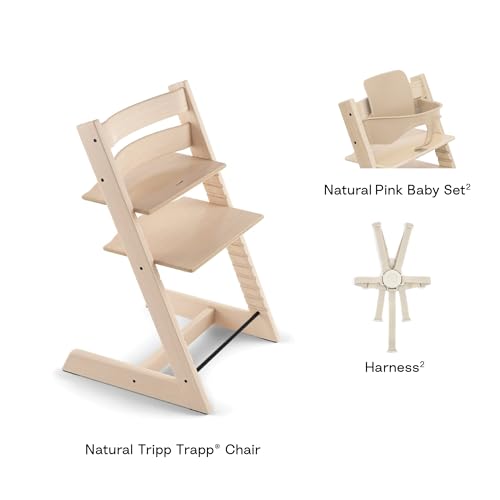
4. Stokke Tripp Trapp — Best for Longevity
The Stokke Tripp Trapp is not a typical high chair. It’s a fully adjustable solid wood chair that grows from baby (with the Newborn Set accessory, sold separately) through adulthood — the chair itself has a 330 lb capacity and is designed to last a lifetime. Both the seat and footrest adjust in depth and height along a track, so the chair always fits the child rather than the other way around.
Without accessories, the Tripp Trapp is suitable from around 6 months (when baby can sit unaided) through adulthood. The Baby Set accessory (railing and harness) is recommended for babies 6 months to approximately 3 years. The chair is JPMA certified and GREENGUARD Gold certified (low chemical emissions).
The price is significantly higher than all other chairs on this list. But amortized over a decade or more of use, and considering it doesn’t go to a landfill when your baby outgrows it, the cost-per-year calculation changes significantly.
Pros:
- Grows from infant (with Baby Set) to adult — indefinite lifespan
- Solid beechwood construction; durable and attractive
- JPMA certified, GREENGUARD Gold certified
- Wide range of colors available
- Fits flush to most tables at adjustable heights
Cons:
- Highest price on this list (chair alone; Baby Set sold separately)
- Baby Set accessory is required for the infant stage — additional cost
- Seat cushions sold separately (chair has no padding)
- Cleaning requires more steps than plastic chairs
- Not foldable
Who it’s for: Parents willing to invest in a piece of furniture that will serve from infancy through adulthood — especially good if you plan to have more than one child.
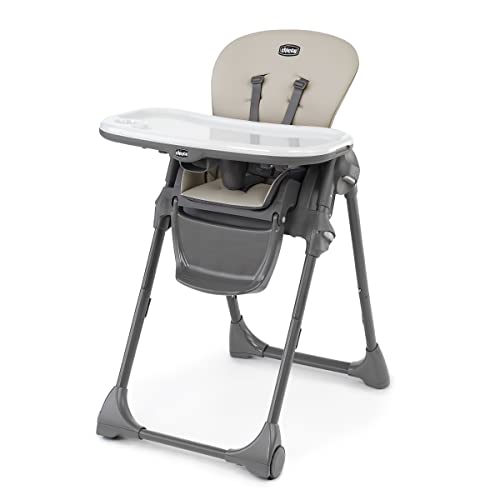
5. Chicco Polly Progress — Best for Adjustability and Features
The Chicco Polly Progress covers seven reclining positions, nine seat heights, and three tray positions — more adjustability than any other chair on this list. The padded seat cover is machine-washable and the tray dishwasher-safe. Five-point harness. Weight limit is 50 lbs.
It’s a full-featured full-size chair with a traditional design. The reclining positions make it suitable for younger babies who can’t yet sit fully upright, which extends its useful life earlier than chairs without recline. The trade-off is size — this is not a chair for small spaces.
Pros:
- Seven recline positions — the most adjustable on this list
- Nine seat heights and three tray positions
- Machine-washable seat pad, dishwasher-safe tray
- Five-point harness
- 50 lb weight limit
Cons:
- Full-size footprint — not suitable for small dining areas
- No convert-to-booster feature
- Higher price than entry-level options
- More parts to clean than minimal designs
Who it’s for: Parents who want maximum adjustability and plan to use the chair from early solid foods (when recline matters) through toddlerhood.
High Chair Safety Guidelines
High chair falls are a leading cause of infant injury during feeding. Follow these practices:
- Always use the harness — even for a short feeding. Never leave baby in a high chair unattended without the harness fastened.
- Check for stability — place the chair on flat, non-slippery flooring. Never place a high chair on carpet if it risks tipping.
- Keep the chair away from walls and counters — babies can push off surfaces and tip the chair.
- Stop using when baby exceeds the weight limit or can climb out — a climbing baby in a high chair is a falling baby.
- Clean regularly — food buildup in harness straps and crevices creates bacterial growth. Wash removable parts weekly and deep-clean monthly.
Look for high chairs that meet ASTM F404 (the standard for children’s high chairs) and carry the JPMA certification seal.
Frequently Asked Questions
When can a baby start using a high chair? Most babies are ready for a high chair around 6 months, when they can sit upright with minimal support and show interest in food. Some chairs with a recline feature can be used slightly earlier, but always follow the manufacturer’s minimum weight and age guidelines.
How long do babies use high chairs? Most children use a high chair from around 6 months until age 2–3 years, when they transition to a booster seat or regular chair. Some high chairs convert to boosters to extend their useful life.
Are high chairs safe for sleeping? No. Like other infant seats, high chairs are not approved sleep surfaces. Never leave a baby unattended in a high chair, and always transfer them when feeding is done.
What is the difference between a high chair and a booster seat? A high chair is a standalone elevated seat. A booster seat straps to a regular dining chair. Many high chairs now convert to booster seats to extend their useful life.
How do I clean a high chair? For fabric/padding: remove covers and machine-wash weekly. For plastic trays: dishwasher or hand-wash with dish soap. For harness straps: spot-clean with mild soap — most straps cannot be soaked. For chair base: wipe with a damp cloth and mild all-purpose cleaner.
Bottom Line
The Graco Slim Snacker is the best all-around choice for most families — good features, folds slim, and converts to a booster. The IKEA Antilop wins on ease of cleaning and value, with no compromise if cleaning simplicity is your top priority. For long-term value, the Stokke Tripp Trapp is genuinely worth the investment if you’ll use it for multiple children or years. The Chicco Polly Progress is for parents who want maximum adjustability from the earliest possible age.
For more on feeding your baby, see our guides on newborn feeding essentials and choosing the right breast pump.
Affiliate Disclosure: MomBabyPicks.com participates in the Amazon Services LLC Associates Program. When you purchase through links on this page, we may earn a small commission at no additional cost to you. Our editorial recommendations are based on product research and are not influenced by affiliate relationships.