Introduction
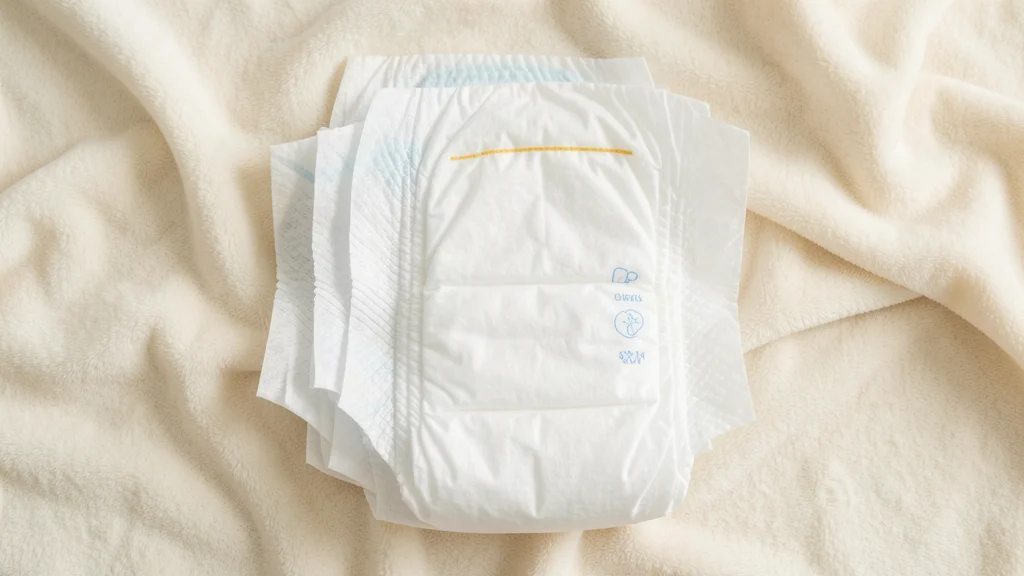
Buying diapers before your baby arrives feels straightforward — until you’re standing in the diaper aisle at midnight, bleary-eyed, wondering whether you grabbed the right size. Newborn skin is genuinely different from older baby skin: thinner, more permeable, and prone to irritation from fragrances, dyes, and a poor fit around the belly-button stump.
The good news is that the diaper market in 2026 has more solid options than ever — from ultra-soft conventional diapers to plant-based and chlorine-free alternatives that prioritize what touches your baby’s skin. The not-so-good news: the marketing copy is thick, and it’s hard to tell real differences from branding noise.
We cut through it below. Whether you’re stocking up before birth or troubleshooting a leak problem at week two, this guide covers five diapers worth considering, what each one actually does well, and who each one fits best.
If you’re also sorting out feeding gear, our guide to the best baby bottles for newborns covers the same level of detail for that decision.
Quick Picks At A Glance
Newborn diaper choice matters more than most people expect — here's where to start based on your priorities.
Best Overall
Pampers Swaddlers
The most-used diaper in U.S. hospitals. Soft, highly absorbent, and includes the umbilical cord notch.
Best Fit
Huggies Little Snugglers
Stretchy sides and a pocketed back waistband catch blowouts better than most competitors.
Best Eco Pick
Seventh Generation Free & Clear
Fragrance-free, chlorine-free process, and no dyes. A reliable plant-based option at a reasonable price.
Best Organic
The Honest Company
Certified plant-based materials, genuinely fun prints, and a subscription model that keeps you stocked.
How We Selected These Diapers
We evaluated each diaper against a consistent set of criteria:
Absorbency — How well does the diaper handle both wetness and the runny, frequent stools that are normal for newborns? We looked at SAP (sodium polyacrylate) distribution and inner layer wicking based on manufacturer specs and parent-reported experience.
Fit around the umbilical cord — Most newborn diapers include a notch or cutout at the waistband. We looked at how well that notch actually clears the stump and whether the elastic at the waistband is gentle enough not to irritate.
Skin-contact materials — We cross-referenced each product’s material disclosures for fragrance, chlorine bleaching, dyes, and known irritants.
Sizing range — Newborns range from 5 lbs to well over 10 lbs. We noted which diapers run large, which run small, and how much overlap exists between newborn and size 1.
Value — Cost-per-diaper matters when you’re going through 10–12 per day in the early weeks.
We did not include any diaper on the basis of marketing claims that couldn’t be tied to a specific, verifiable feature.
Comparison Table
| Diaper | Size Range | Umbilical Notch | Fragrance-Free | Chlorine-Free Process | Approx. Cost/Diaper |
|---|---|---|---|---|---|
| Pampers Swaddlers | Up to 10 lbs (N), 8–14 lbs (1) | Yes | No | No | ~$0.22 |
| Huggies Little Snugglers | Up to 10 lbs (N), 8–14 lbs (1) | Yes | No | No | ~$0.22 |
| Seventh Generation Free & Clear | 6–10 lbs (N/1) | Yes | Yes | Yes (TCF) | ~$0.30 |
| The Honest Company | Up to 10 lbs (N) | Yes | Yes | Yes (PCF) | ~$0.32 |
| Dyper Bamboo | 5–9 lbs (N), 8–14 lbs (S) | Yes | Yes | Yes (ECF) | ~$0.38 |
TCF = Totally Chlorine Free. PCF = Processed Chlorine Free. ECF = Elemental Chlorine Free. Prices based on subscription/bulk pricing as of June 2026.
Pampers Swaddlers
Pampers Swaddlers have a large parent following, and the reasons are practical: the inner layer uses a quilted texture that helps pull moisture away from skin, and the waistband notch for the umbilical cord stump is one of the more reliably cut ones in the conventional diaper category. The yellow-to-blue wetness indicator stripe is visible through the outer cover, which is genuinely useful at 3 a.m.
The diaper contains fragrance and is bleached with a conventional chlorine-free but not totally chlorine-free process. For most babies this isn’t a problem, but if your newborn has shown skin sensitivity to fragrances, it’s worth keeping in mind.
Specs: PP absorbent core with SAP · wetness indicator · umbilical cord notch · contains fragrance · NB fits up to 10 lbs
Price: ~$0.28/diaper

Pros:
- Wetness indicator makes it easy to check without undressing the baby
- Umbilical cord notch cuts deep enough to clear most stumps
- Widely available at major retailers — easy to grab locally
Cons:
- Contains fragrance, which can irritate sensitive skin
- Not chlorine-free processed — less relevant for most babies, but worth knowing
Who it’s for: Parents who want a reliable, easy-to-find diaper and whose baby hasn’t shown any fragrance sensitivity.
Huggies Little Snugglers
Huggies Little Snugglers compete directly with Swaddlers and do a few things differently. The pocketed waistband is Huggies’ standout feature — it creates a physical barrier at the back waistband that catches blowouts before they escape. For breastfed newborns whose stools can be extremely liquid, this is a meaningful design difference.
The fit tends to run slightly narrower in the thigh than Swaddlers, which some parents find better on lean babies and others find too snug. Like Swaddlers, Little Snugglers contain fragrance and use a conventional bleaching process.
Specs: GentleAbsorb liner · pocketed back waistband · umbilical cord notch · contains fragrance · NB fits up to 10 lbs
Price: ~$0.29/diaper

Pros:
- Pocketed back waistband provides a physical blowout barrier
- GentleAbsorb liner is soft against skin
- Umbilical cord notch is clearly cut
Cons:
- Contains fragrance
- Thigh fit runs narrower — may not work well on chunkier babies
Who it’s for: Parents of leaner newborns, or anyone who’s dealt with blowout issues and wants a mechanical backup at the waistband.
Seventh Generation Free & Clear
Seventh Generation’s Free & Clear line is one of the most accessible chlorine-free and fragrance-free options at mainstream retailers. “Free & Clear” means no fragrance, no lotion, no chlorine in the bleaching process, and no latex — the diaper is about as stripped-down as a conventional disposable gets.
Absorbency is solid for light-to-moderate wetness. Some parents find the inner layer slightly less soft-feeling than Pampers or Huggies, but it’s still well within the range of comfortable for most babies. The tradeoff for clean materials is a small uptick in cost — roughly $0.30 per diaper versus $0.22 for the major conventional brands.
For more context on building a low-irritant newborn setup, see our newborn essentials checklist.
Specs: Totally Chlorine Free (TCF) · fragrance-free · lotion-free · latex-free · umbilical cord notch · NB fits 6–10 lbs
Price: ~$0.28/diaper

Pros:
- Fragrance-free, lotion-free, latex-free
- Totally Chlorine Free (TCF) processing
- Available at Target, Whole Foods, and Amazon — not hard to find
Cons:
- Inner layer is softer than some conventional options but not the plushest available
- Cost-per-diaper is higher than conventional brands
Who it’s for: Parents who want to minimize chemical exposure without leaving the mainstream diaper format or paying premium subscription prices.
The Honest Company Diapers
The Honest Company diapers use an outer cover made with plant-based materials and an absorbent core that does not include chlorine-bleached pulp. They’re fragrance-free, free of lotions, and the inner layer is dermatologically tested (their published testing, not an independent third-party certification).
One practical differentiator is the elastic leg cuffs — they’re soft and flexible without leaving deep red marks, which is something parents of babies with sensitive skin notice quickly. The umbilical cord cutout is present on the newborn size. Print designs rotate seasonally, which is a minor thing but parents who care about aesthetics tend to appreciate it.
Cost is slightly higher than Seventh Generation, and the newborn size skews toward smaller babies — if your baby arrives above 9 lbs, go straight to size 1.
Specs: Plant-based outer cover · Processed Chlorine Free (PCF) · fragrance-free · lotion-free · soft elastic leg cuffs · umbilical cord notch · NB fits up to 10 lbs
Price: ~$0.44/diaper

Pros:
- Plant-based outer cover materials
- Fragrance-free and lotion-free
- Soft leg cuffs that don’t leave marks
- No chlorine bleaching
Cons:
- Newborn size runs small — not ideal for babies over 9 lbs at birth
- Higher cost than conventional options
- Some parents report the absorbent core shows faster saturation than Pampers at heavy usage
Who it’s for: Parents who want cleaner materials and plant-based sourcing, especially for smaller newborns.
Dyper Bamboo Diapers
Dyper makes a bamboo-based diaper that sits at the premium end of the newborn diaper market. The inner and outer layers use bamboo viscose, which has a noticeably soft texture. The diapers are fragrance-free, free of parabens, phthalates, and elemental chlorine, and Dyper publishes its material safety testing on its website.
The practical performance is good — bamboo viscose has natural absorbent properties, and the diaper handles both wetness and light stools reliably. Blowout containment is adequate but not as mechanically reinforced as the Huggies pocketed waistband.
Dyper operates primarily through subscription, though individual boxes are available on Amazon. The subscription model works well if you commit to one brand early; it’s less convenient if you want to try and compare.
For a broader look at sustainable baby product choices, our guide to eco-friendly baby gear covers how to think through these decisions.
Specs: Bamboo viscose inner and outer layers · Elemental Chlorine Free (ECF) · fragrance-free · phthalate-free · paraben-free · NB fits 5–9 lbs
Price: ~$0.44/diaper

Pros:
- Bamboo viscose inner and outer layers — noticeably soft
- Fragrance-free, phthalate-free, paraben-free
- Elemental Chlorine Free processing
- Material safety data published publicly
Cons:
- Higher cost per diaper than any other option on this list
- Primarily subscription-based — less flexible for trial
- Not carried at most brick-and-mortar stores
Who it’s for: Parents prioritizing soft, clean materials and willing to pay a premium; those who like the simplicity of a subscription delivery model.
Material Safety & Certifications
Newborn skin absorbs more per surface area than adult skin, which is why the materials in a diaper — especially the inner layer touching the skin — are worth understanding.
Fragrance: Synthetic fragrance in diapers is the most common cause of diaper rash that isn’t related to yeast or prolonged wetness. If your baby develops a rash that clears when you switch brands, fragrance is often the culprit. The Seventh Generation, Honest, and Dyper options on this list are all fragrance-free.
Chlorine bleaching: Conventional chlorine bleaching can leave trace dioxin residues. “Elemental Chlorine Free” (ECF) eliminates the most reactive form of chlorine. “Processed Chlorine Free” (PCF) and “Totally Chlorine Free” (TCF) go further. The practical risk difference is debated in the literature, but parents who prefer to minimize exposure have clear options.
Phthalates and parabens: These are not typically present in the absorbent core but can appear in adhesives, inks, and elastic components. Dyper explicitly tests and discloses for both; Honest Company discloses phthalate-free status. Pampers and Huggies do not make specific phthalate-free claims in their published product information.
OEKO-TEX and similar certifications: Some premium diapers carry third-party certifications for restricted substances. If this is a priority, look for published certification documentation — not just a logo on the packaging — and verify it applies to the current product formulation.
No diaper on this list contains BPA or latex in its standard formulation. All five include SAP (sodium polyacrylate) as the primary absorbent material, which has a long safety record in consumer products.
FAQ
How many newborn diapers do I actually need before birth? One to two packs (roughly 80–120 diapers) is a reasonable amount to have on hand before delivery. Avoid buying more than that in newborn size — babies can outgrow it within two to three weeks, and some larger babies skip newborn entirely.
When should I move up to size 1? When the newborn diaper consistently leaks at the leg openings or the waistband tabs no longer overlap comfortably at the front. Weight ranges on the packaging are a starting point, but the actual fit is more reliable than the number on the scale.
What causes diaper rash in newborns, and do diapers matter? Most newborn diaper rash is caused by prolonged skin contact with urine or stool — frequency of changes matters more than the brand. That said, fragrance sensitivity is a real secondary cause. If rash appears without an obvious change in change frequency, try switching to a fragrance-free option.
Are plant-based or bamboo diapers meaningfully better for sensitive skin? There’s no broad clinical evidence that plant-based materials perform better for diaper rash prevention in the general newborn population. For babies with documented skin sensitivities, fragrance-free and dye-free options — whether plant-based or conventional — tend to show the most consistent improvement.
What does the umbilical cord notch actually do? It prevents the waistband from pressing against or rubbing the umbilical cord stump, which speeds up drying and reduces irritation. Most newborn diapers include one, but the depth and shape of the notch varies — some clear the stump better than others.
Can I use size 1 diapers from the start instead of newborn? If your baby is born above 8–9 lbs, yes — size 1 will likely fit immediately. For smaller babies, size 1 will gap at the legs and won’t contain stools effectively. The cost savings aren’t worth the cleanup.
Which Diaper Should You Choose?
Start with Pampers Swaddlers or Huggies Little Snugglers if you want wide availability, a proven fit, and aren’t dealing with known skin sensitivities. The wetness indicator on Swaddlers is genuinely useful for new parents; the pocketed waistband on Little Snugglers is worth trying if blowouts become a recurring problem.
Move to Seventh Generation Free & Clear if your baby develops a rash that doesn’t resolve with more frequent changes — eliminating fragrance is the first thing worth trying, and Seventh Generation is the most affordable way to do it.
Choose The Honest Company if you want plant-based materials, a soft leg cuff, and are okay with a slightly smaller newborn size range. Choose Dyper if soft bamboo materials and complete ingredient transparency are priorities and the higher cost per diaper fits your budget.
There’s no single right answer here. Your baby’s skin, size, and your own practical constraints (store availability, subscription preference, budget) all factor in. Keeping one pack of a backup brand on hand during the first month makes switching easy if your first choice doesn’t work out.
Affiliate Disclosure: MomBabyPicks.com participates in the Amazon Services LLC Associates Program. When you purchase through links on this page, we may earn a small commission at no additional cost to you. Our editorial recommendations are based on product research and are not influenced by affiliate relationships.