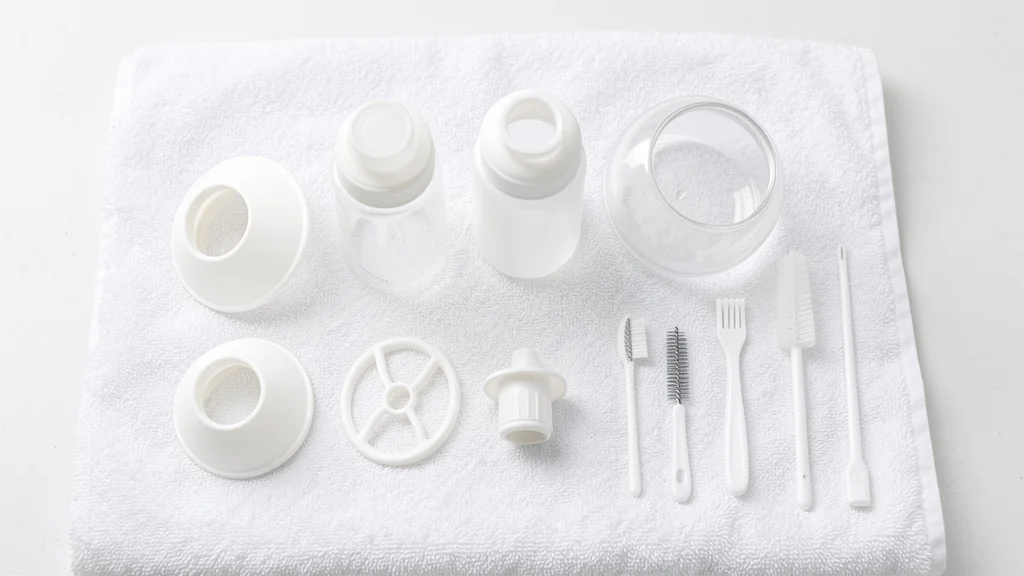
Cleaning pump parts is one of the least glamorous parts of pumping, but it matters. A simple routine can make the process faster and less stressful.
Always follow the instructions that came with your specific pump. Different brands have different parts, and some pieces may not be dishwasher safe.
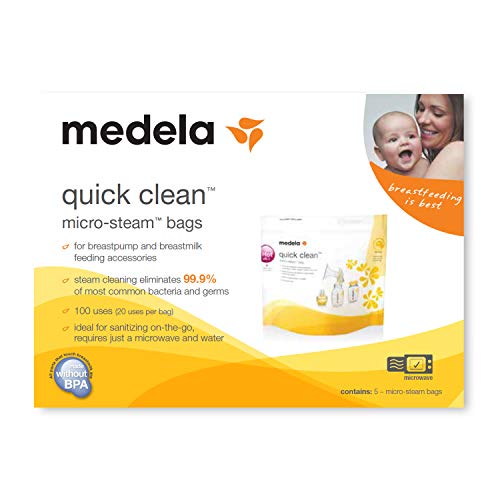
Medela Quick Clean Micro-Steam Bags
Check Price on Amazon →Know Which Parts Touch Milk
The parts that touch breast milk usually need cleaning after use. This often includes flanges, valves, membranes, bottles, and connectors.
Tubing may not need routine washing if milk does not enter it, especially with a closed-system pump. If milk or moisture gets into the tubing, follow the manufacturer’s cleaning instructions.
Create a Wash Routine
After pumping, take the parts apart and rinse milk residue from each piece. Wash with warm soapy water in a clean basin used only for feeding items.
Avoid washing pump parts directly in a sink that may contain food residue or bacteria.
Dry Completely
Air drying is important. Place parts on a clean towel or drying rack and let them dry fully before storing.
Putting damp parts into a sealed bag can trap moisture and make the parts smell musty.
Store Clean Parts Together
Once dry, store clean pump parts in a clean container or bag. Keeping parts together makes it easier to grab everything for the next session.
If you pump at work, pack one full set of clean parts for each session when possible. This reduces stress and avoids rushed cleaning in a shared sink.
Dishwasher Use
Some pump parts are dishwasher safe, usually on the top rack. Small pieces should go in a dishwasher basket so they do not fall to the bottom.
Check the manual first. Heat can damage certain parts or shorten their lifespan.
Replace Worn Parts
Valves and membranes can wear out over time. If suction suddenly feels weaker, old parts may be the reason.
Keep a small backup set if you pump often. A missing valve or torn membrane can interrupt an entire pumping session.
Make It Easier
Many pumping parents keep two or three sets of parts. This costs more upfront but can save a lot of time during busy weeks.
You can also prepare a small pump bag with clean parts, storage bags, labels, and a spare shirt or nursing pads for workdays.
Cleaning is not the fun part, but a predictable routine makes pumping feel much more manageable.
Comparison Table: Pump Cleaning Tools
| Product | Best For | Price |
|---|---|---|
| Medela Quick Clean Micro-Steam Bags | Fast microwave sterilizing | ~$8 |
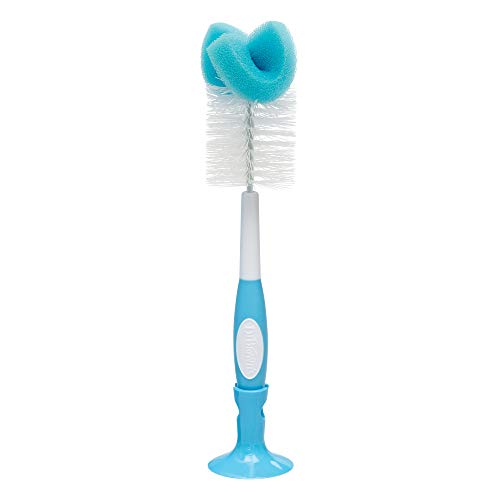
| Dr. Brown’s Bottle & Nipple Brush | Reaching all pump parts | ~$7 |
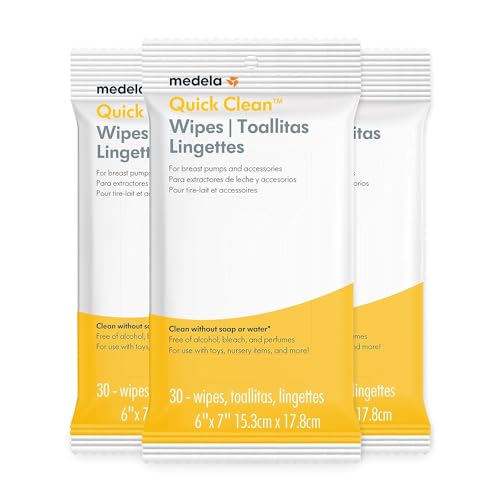
| Medela Quick Clean Breast Pump Wipes | On-the-go quick clean | ~$12 |
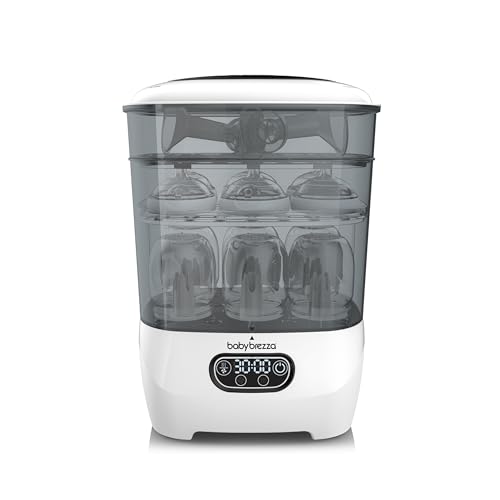
| Baby Brezza Bottle Sterilizer and Dryer Advanced | All-in-one sterilizing | ~$110 |
1. Medela Quick Clean Micro-Steam Bags — Sterilize in 3 Minutes
Specs: 5 bags per pack; each bag reusable up to 20 times; microwave sterilization kills 99.9% of household bacteria.
Price: ~$8
Pros:
- Sterilizes flanges, valves, and bottles in just 3 minutes in any microwave
- Each bag is reusable up to 20 times — great value per use
Cons:
- Requires a microwave; not useful when traveling without one
Who it’s for: Working moms who pump multiple times a day and need a fast, reliable sterilizing method between sessions.
Affiliate Disclosure: MomBabyPicks.com participates in the Amazon Services LLC Associates Program. When you purchase through links on this page, we may earn a small commission at no additional cost to you. Our editorial recommendations are based on product research and are not influenced by affiliate relationships.
2. Dr. Brown’s Bottle & Nipple Brush — Reaches All Pump Parts
Specs: Dual-ended design with bottle brush and nipple brush; soft bristles; dishwasher safe handle.
Price: ~$7
Pros:
- Dual-end design reaches inside narrow flanges and small valve openings
- Soft bristles clean without scratching silicone parts
Cons:
- Bristles can spread bacteria if not rinsed and dried properly between uses
Who it’s for: Parents who hand-wash pump parts daily and want a brush that handles every piece, not just bottles.
Affiliate Disclosure: MomBabyPicks.com participates in the Amazon Services LLC Associates Program. When you purchase through links on this page, we may earn a small commission at no additional cost to you. Our editorial recommendations are based on product research and are not influenced by affiliate relationships.
3. Medela Quick Clean Breast Pump and Accessory Wipes — Quick Clean On the Go
Specs: Pre-moistened; individually wrapped; safe for pump parts, flanges, and bottles; no rinsing required.
Price: ~$12
Pros:
- Individually wrapped wipes are easy to stash in a pump bag or purse
- No sink or water needed — cleans parts on the go between sessions
Cons:
- Not a replacement for full washing and sterilizing; best used as a between-session solution
Who it’s for: Moms who pump at work or on the go and need a quick, no-fuss way to clean parts when a sink is not available.
Affiliate Disclosure: MomBabyPicks.com participates in the Amazon Services LLC Associates Program. When you purchase through links on this page, we may earn a small commission at no additional cost to you. Our editorial recommendations are based on product research and are not influenced by affiliate relationships.
4. Baby Brezza Bottle Sterilizer and Dryer Advanced — All-in-One Solution
Specs: Sterilizes and dries automatically; large capacity; fits bottles and pump parts; digital timer.
Price: ~$110
Pros:
- Sterilizes and dries in one unit — no separate drying rack needed
- Large capacity handles full sets of pump parts and bottles in one cycle
Cons:
- Higher upfront cost; takes up counter space
Who it’s for: Families who want a complete, hands-off cleaning and drying solution and pump multiple times per day.
Affiliate Disclosure: MomBabyPicks.com participates in the Amazon Services LLC Associates Program. When you purchase through links on this page, we may earn a small commission at no additional cost to you. Our editorial recommendations are based on product research and are not influenced by affiliate relationships.
FAQ
Q: How often should I sterilize breast pump parts? The CDC recommends sterilizing pump parts at least once a day, especially for babies under 3 months, premature babies, or babies with a weakened immune system. Otherwise, thorough washing after each use is sufficient.
Q: Can I put breast pump parts in the dishwasher? Many parts are dishwasher safe on the top rack, but always check your pump’s manual first. Small pieces like valves and membranes should go in a dishwasher basket.
Q: How do I clean pump parts at work without a dedicated sink? Rinse parts with bottled or filtered water, use a pump-specific cleaning wipe between sessions, and bring a full sterilization cycle at home each night. Pack extra part sets so you always have clean ones ready.
Q: When should I replace pump parts? Replace membranes and valves every 2–4 weeks with daily use, or sooner if you notice reduced suction. Flanges and connectors typically last longer but should be replaced if cracked or stained.
Q: Is it safe to just rinse pump parts without soap? No. A rinse alone does not remove milk fat residue or bacteria. Wash with warm soapy water or sterilize after each pumping session.
Related reading: How to Choose a Breast Pump | Best Breast Pumps
Affiliate Disclosure: MomBabyPicks.com participates in the Amazon Services LLC Associates Program. When you purchase through links on this page, we may earn a small commission at no additional cost to you. Our editorial recommendations are based on product research and are not influenced by affiliate relationships.